The record
The London branch of the Industrial and Commercial Bank of China (ICBC), a lender whose majority shareholders are China’s finance ministry and other state entities, repeatedly kept or took on clients that its own compliance staff had flagged as high risk. That is the finding of “China Capital”, an investigation published on 14 September 2026 by the International Consortium of Investigative Journalists (ICIJ) and 23 media partners.
ICIJ’s reporting rests on 4.8 million internal records in English and Chinese from the branch and a subsidiary at the same address, dating from 2005 to 2024. They include almost 200 loan agreements signed between 2010 and 2024 with borrowers in about 30 countries. According to ICIJ, Beijing sometimes asked London officers to pursue goals linked to the Belt and Road Initiative, and some credit forms carried a section headed “China rationale”.
Angola: lending continued after Luanda Leaks
ICBC London helped the bank’s headquarters lend more than $2.5 billion to Sonangol, Angola’s state oil company, at a time when it was controlled by associates of the late president José Eduardo dos Santos, ICIJ reports. The relationship continued after ICIJ’s 2020 Luanda Leaks investigation into the business empire of his daughter, Isabel dos Santos.
Internal memos from 2021 described criticism of Isabel dos Santos as “motivated to some degree by chauvinistic interest”, and one noted that Angola was a Belt and Road partner of China. She was later sanctioned by the United States and the United Kingdom and charged in Angola with causing state losses of about $219 million, according to ICIJ.
Sierra Leone: a port loan committed early
In late 2017, ICBC and another Chinese state bank approved a $659 million loan to expand the Queen Elizabeth II Quay in Freetown. The records show that, at the request of the Beijing headquarters, the London branch committed to the loan before it had received all the documents it needed from the developer, National Port Development (SL) Ltd, which ICIJ describes as controlled from the British Virgin Islands.
Later reviews found public reports of “significant allegations of bribery and corruption” against two of the developer’s owners. ICBC decided not to disburse the money but, according to ICIJ, did not formally revoke the facility, partly to avoid upsetting Sierra Leone’s government.
Exceptions on sanctions and politically exposed clients
The files also show the branch making room for other high-risk clients. In 2017 it was used to lend $105 million to the Russian mining group Nornickel, in which Oleg Deripaska indirectly held about 13%. After the US Treasury sanctioned Deripaska in April 2018, a compliance officer flagged a breach, but officers made an exception on the grounds that he was a minority shareholder. ICBC committed a further $200 million in 2020 as part of a 21-bank loan.
In Azerbaijan, ICBC accepted Pasha Bank, co-owned by daughters of President Ilham Aliyev, as a client in 2017 despite corruption red flags, ICIJ reports. When the bank began to reconsider the relationship in 2021, it delayed its exit until $24 million in deposits had matured.
The responses
ICBC did not respond to repeated requests for comment, according to ICIJ. Through a spokesperson, the Chinese government rejected “false narratives” of “opaque lending”. Sahr Ngegba, responding for National Port Development’s directors, called the allegations “baseless”, said the arrangement had gone through “appropriate governmental and parliamentary processes in Sierra Leone”, and said the company had received no formal notice that the facility was cancelled over corruption allegations.
Deripaska has denied wrongdoing and describes the sanctions against him as politically motivated. Isabel dos Santos has repeatedly denied wrongdoing. Sonangol, Pasha Bank and Nornickel did not respond to ICIJ.
Questions that remain unanswered
How did the branch’s UK supervisors assess its appetite for high-risk business while these decisions were being taken? Is the undisbursed Freetown facility still formally open on ICBC’s books? And how much of the Sonangol lending has since been repaid?
The findings rest on leaked internal records that The Ledgers has not seen. Internal risk assessments and compliance flags are not findings of wrongdoing, and no court has found that ICBC or any of the clients named here acted unlawfully in connection with these transactions.
Based on reporting from: ICIJ · China Capital · 14 September 2026; ICBC · 2025 Annual Report; US Treasury · Deripaska designation · 6 April 2018.
Source documents
03- ICIJ · China Capital · 14 September 2026No public link supplied
- ICBC · 2025 Annual Reporticbc.com.cn
- US Treasury · Deripaska designation · 6 April 2018home.treasury.gov
File updates
Report published
Investigation ongoing
Editorial research status recorded.
Editorial note
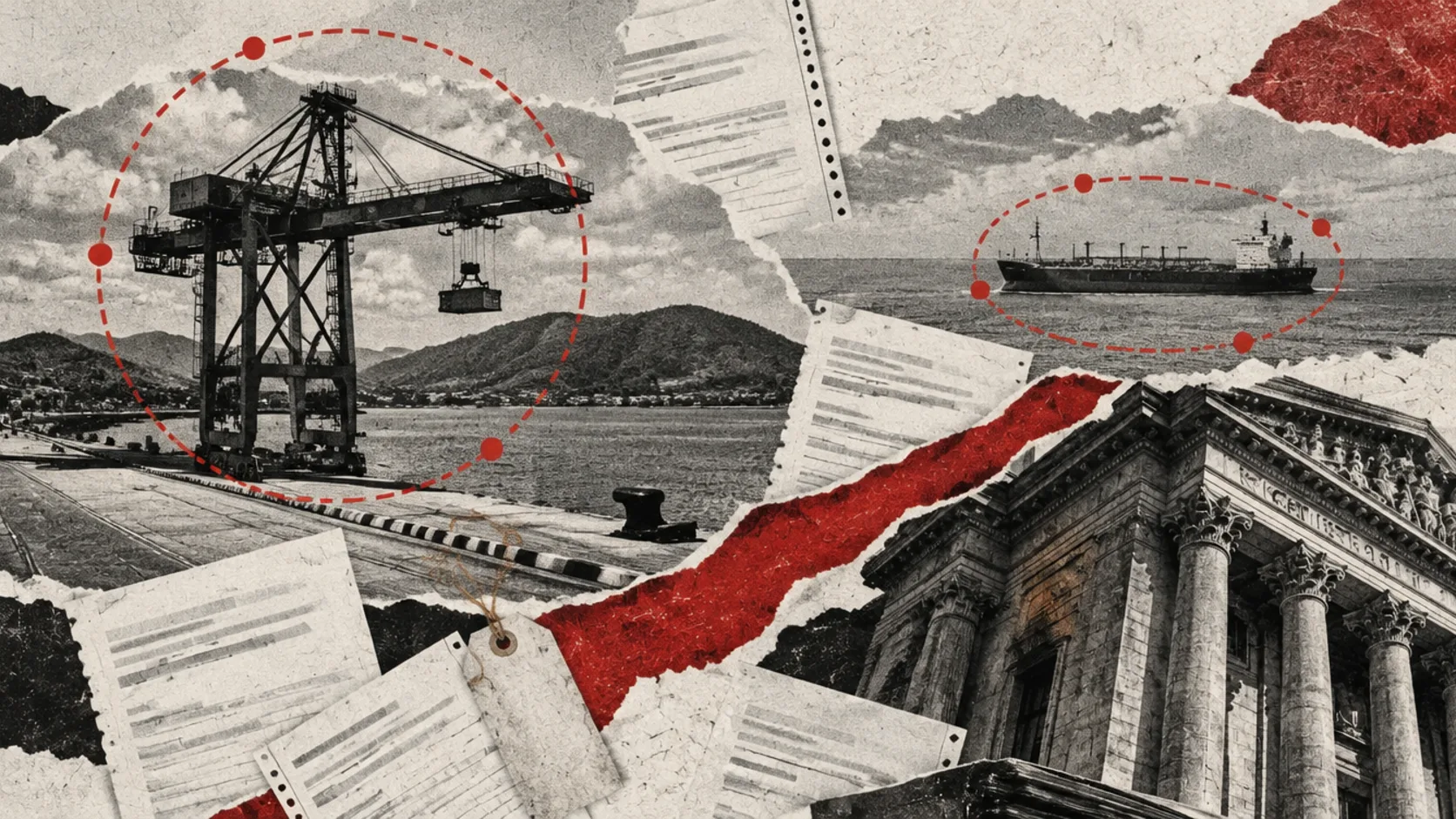
This research brief summarises the International Consortium of Investigative Journalists’ “China Capital” investigation and the public documents cited. The Ledgers has not independently reviewed the leaked ICBC records; quotations are taken from ICIJ’s reporting. The allegations are disputed by several of the parties named. The illustration is AI-generated and does not depict an actual event or person.
Submit a response or correction ↗Reader comments
Verified members can comment. Comments appear after editorial approval. Please address the evidence and avoid personal information.
No published comments yet.
Sign in / Create account →Stay with the story.
Follow The Ledgers for new investigations, developments in our case files and videos.