The record
The day before
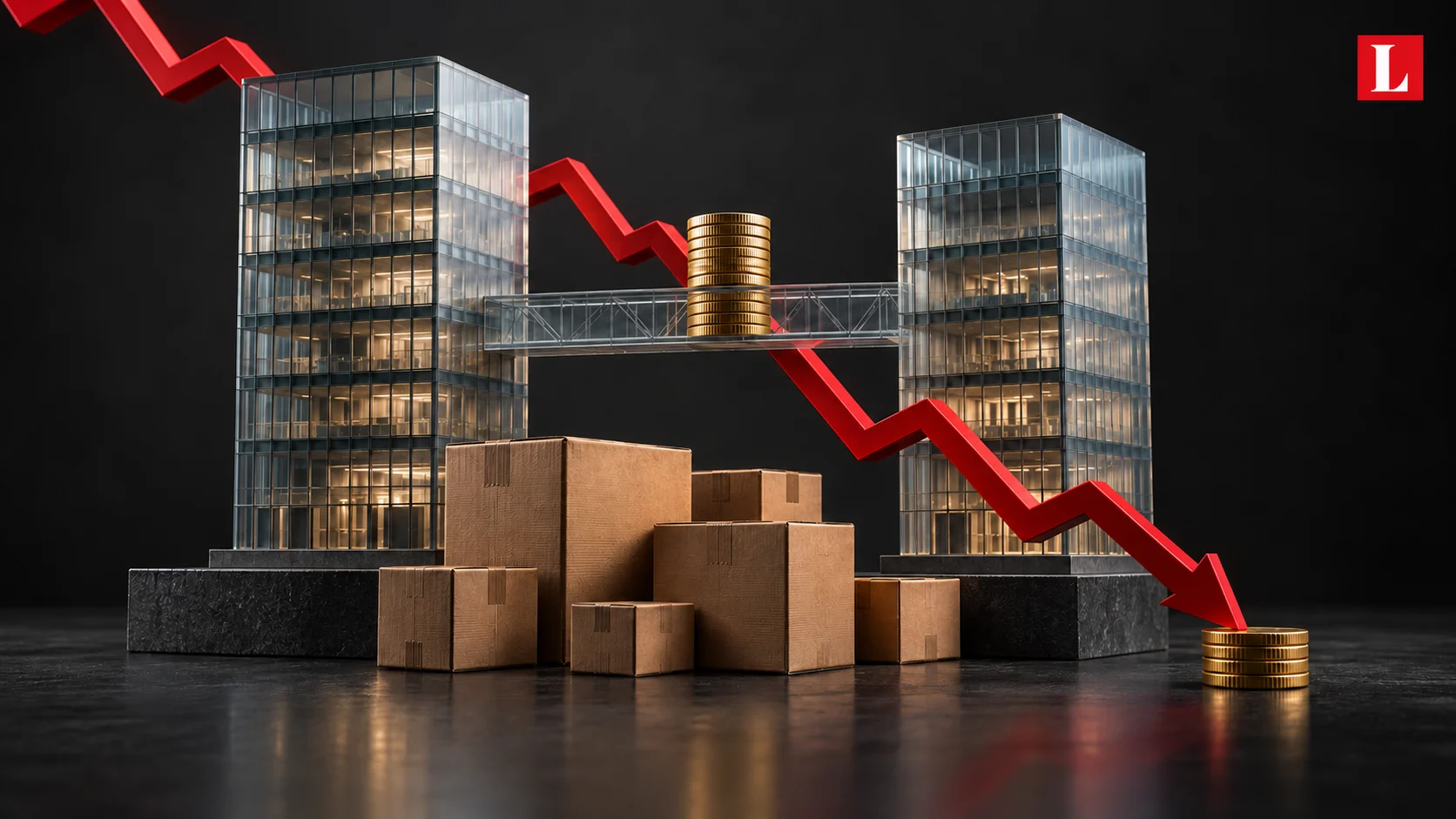
Barem Ambalaj shares stood at TRY 67.50 on 16 July 2026. They closed at the daily lower price limit on each of the next 16 trading days, reaching TRY 12.03 on 11 August: a decline of 82 per cent. On 12 August the company disclosed its application for a concordat, a court-supervised debt restructuring process, on Türkiye’s Public Disclosure Platform, KAP. It cited “rising financing costs, a heavy interest burden and chronic delays in collecting trade receivables”.
A block of shares changed hands in Borsa Istanbul’s wholesale trading market on 11 August, one day before the announcement. The seller was the Salur Equity Hedge Fund managed by Vega Portföy. The buyer was recorded as “Vega Portföy Yönetimi A.Ş. on behalf of Armadillo Holding A.Ş.” The transaction involved shares with a nominal value of TRY 9,758,000, representing 3.72 per cent of Barem’s capital. The price was TRY 24.60, for a total of TRY 240,046,800. İş Yatırım acted as intermediary for both sides.
The market price that day was TRY 12.03. The buyer therefore paid more than twice the market price. In round numbers, the fund transferred a position worth approximately TRY 117 million on the exchange for TRY 240 million; the difference of about TRY 123 million moved from Armadillo’s cash into the fund’s assets. With the shares having closed at the lower limit for 16 days, selling a position of this size on the exchange was effectively impossible for the fund. The wholesale sale opened an exit for a position that had none.
Why was the price so high?
The price was not arbitrary; it arose mechanically. Borsa Istanbul’s wholesale trading procedure defines the base price as “the average of the weighted average prices over the preceding 10 business days” and permits trades within 20 per cent above or below it. The disclosed range of TRY 22.12–33.18 corresponds exactly to a base price of TRY 27.65, plus or minus 20 per cent. For a share hitting its lower limit every day, the ten-day average remains far above the current price. The rule allowed the falling shares to be transferred at a backward-looking price; the parties used that possibility in the lower half of the range.
The same procedure also states that remaining within the permitted range does not mean the exchange has approved the price, and that the parties are responsible for pricing inconsistent with market conditions in related-party transactions. Here the parties are related: the buyer owns 80 per cent of the company managing the fund.
Who owns Vega?
According to the ownership table on KAP, TRY 52 million of Vega Portföy’s TRY 65 million capital belongs to Armadillo Holding and TRY 13 million to Hakan Subaşı. Ümit Arıkan chairs the board; Hakan Subaşı is deputy chair. The same two names appear on Arıkanlı Holding’s official management page: Arıkan as chair, Subaşı as general coordinator and CEO. Yurtiçi Kargo is a company in that holding; 25 per cent belongs to Geopost, part of France’s La Poste group.
Vega’s independent audit report dated 31 December 2025 puts figures on this relationship. Arıkanlı Holding, Yurtiçi Kargo and Ümit Arıkan appear under “related parties”. Revenue included approximately TRY 51.5 million from Yurtiçi Kargo and TRY 12.5 million from Arıkanlı Holding in 2024, and approximately TRY 10 million from Ümit Arıkan in 2025. The portfolio company’s principal client is its owners’ own group. The largest item comes from Yurtiçi Kargo, a quarter of which is owned by Geopost. The documents do not link these payments to the Barem transaction. But whether the French partner’s control rights captured these intra-group relationships is the first element of the question addressed below.
This review could not verify Armadillo’s ultimate individual shareholders through a current company-register document. Arıkan’s management position does not establish that he owns all of Armadillo.
The central question is reversed
The usual concern in related-party sales is that fund investors may have suffered a loss. Here the picture appears reversed: the fund received twice the market price; Armadillo paid the premium. This does not end the examination. It changes the question.
Hedge funds are sold only to qualified investors, and their investor lists are not public. If the Salur Fund’s investors were outsiders, Armadillo paid more than TRY 100 million extra to rescue third parties; why it did so, and what obligation or concern motivated it, needs explaining. If the investors were within the group, the transaction moved money from one pocket to another and fixed the fund’s net asset value at a backward-looking price one day before the collapse. Either possibility may have a legitimate explanation; neither can be judged without the documents.
Whether Armadillo held Barem shares before the transaction, whether there were other commercial ties between Barem and the Arıkan group, and whether the parties knew on 11 August that a concordat application was being prepared also remain open questions. The announcement came on 12 August; such applications generally require days of preparation.
The September list: two different funds
Armadillo and Vega also appeared in late-September reporting on the Istanbul Chief Public Prosecutor’s Office’s fund investigation. On 27 September, measures affecting 45 companies and 19 funds were lifted following a new assessment by the Capital Markets Board, SPK. The list included Armadillo Holding and Vega Portföy Mavi Hedge Fund. The imposition of a measure shows that Armadillo came within the investigation’s scope; its removal was not an acquittal, but the result of the assessment at that stage.
The fund involved in the Barem sale was Salur, not Mavi. The documents examined contain no record that the Barem transaction was itself under investigation.
A new question for the French partner: what did Geopost know?
Geopost’s 25 per cent stake in Yurtiçi Kargo adds a distinct corporate governance dimension because Geopost belongs to France’s publicly owned La Poste group. A 2007 decision of Türkiye’s Competition Board shows that Geopost had joint-control rights, including budget approval and board representation. However, the available documents do not show that Geopost or La Poste participated directly in the Barem–Salur–Armadillo transaction, knew about it or took part in any wrongdoing. Such a conclusion cannot therefore be drawn: reading an ownership chain as a money trail would go beyond the records available.
Yet this ownership and control structure itself raises new questions. How did the group’s governance and compliance mechanisms assess a related-party transaction of approximately TRY 240 million, executed with the fund manager’s 80 per cent shareholder just one day before a concordat announcement and at roughly twice that day’s market price? What was the economic rationale for Armadillo paying approximately TRY 123 million above market value? Were Yurtiçi Kargo’s approximately TRY 51.5 million in related-party payments to Vega in 2024 separately considered in the budget approval processes described in the decision? Did this transaction, or the relationships between the parties, come before any management, audit or risk mechanism involving Geopost representatives?
The issue is not to accuse Geopost or La Poste of bribery or corruption. The available public records do not support such an allegation. The issue is to clarify what governance, conflict-of-interest and compliance controls this unusual related-party transaction passed through within a structure in which an international group linked to French public capital holds joint-control rights over Yurtiçi Kargo.
The basic question for Geopost and La Poste is therefore simple: what did the group know about the Barem transaction of 11 August 2026 and the relationships between its parties? If it knew, what assessments did it make? If it did not, why did joint-control and oversight mechanisms not bring the transaction to its attention?
What can and cannot be established
The public records establish three points: the fund manager and the buyer are in the same group; the transaction took place at the bottom of the share-price collapse, one day before the concordat announcement; and the price was twice the market price, made possible by the exchange’s backward-looking base-price formula.
What they do not establish is intent. That requires the fund’s investment committee decisions, conflict-of-interest assessments, board records, the Salur Fund’s investor structure, information flows between the parties, and evidence of what both Armadillo and Geopost knew on 11 August. The records nevertheless clearly raise a serious corporate governance question requiring an explanation. The next step is to obtain these documents and the parties’ responses, not to infer a crime from an ownership chart.
Our questions to the parties
The Ledgers will put questions arising from this research to Vega Portföy, Armadillo Holding, Arıkanlı Holding, Barem Ambalaj, İş Yatırım, Geopost and La Poste.
SPK and Borsa Istanbul will also be asked about oversight of the transaction, its related-party nature, the pricing mechanism and whether any subsequent review took place.
The following questions will be central to the next stage of the investigation:
1. Why did Armadillo pay approximately TRY 240 million for a position with a market value of approximately TRY 117 million?
2. Who were the Salur Fund’s ultimate investors, and who benefited economically from this transaction?
3. Did any party know before the 11 August transaction that Barem was preparing a concordat application?
4. What conflict-of-interest controls were applied because of the relationship between Vega Portföy and Armadillo?
5. Did Yurtiçi Kargo’s related-party payments to Vega Portföy come before Geopost’s management, audit or budget-control mechanisms?
6. What did Geopost and La Poste know about these relationships and the 11 August transaction?
The Ledgers is ready to publish every party’s response and, where necessary, update this investigation in light of new documents and explanations.
At this stage the records establish no crime. They show an unusual movement of money requiring explanation, striking timing and unanswered questions between connected companies.
Based on reporting from: Borsa Istanbul · Wholesale sale disclosure, 11 August 2026; Borsa Istanbul · Wholesale trading procedure; KAP · Vega Portföy ownership table; Vega Portföy · Independent audit report, 31 December 2025; Arıkanlı Holding · Official management page; Competition Board · 2007 Geopost decision; KAP · Barem Ambalaj concordat disclosure, 12 August 2026.
Source documents
07- Borsa Istanbul · Wholesale sale disclosure, 11 August 2026No public link supplied
- Borsa Istanbul · Wholesale trading procedureNo public link supplied
- KAP · Vega Portföy ownership tableNo public link supplied
- Vega Portföy · Independent audit report, 31 December 2025No public link supplied
- Arıkanlı Holding · Official management pageNo public link supplied
- Competition Board · 2007 Geopost decisionNo public link supplied
- KAP · Barem Ambalaj concordat disclosure, 12 August 2026No public link supplied
File updates
Report published
Editorial note
The publications used in this account are listed above.
Submit a response or correction ↗Reader comments
Verified members can comment. Comments appear after editorial approval. Please address the evidence and avoid personal information.
No published comments yet.
Sign in / Create account →Stay with the story.
Follow The Ledgers for new investigations, developments in our case files and videos.